Standards & Requirements
Phase 1 ESA Checklist: What Gets Reviewed
Under ASTM E1527-21, a Phase 1 Environmental Site Assessment has four components: records review, regulatory database searches, site reconnaissance, and interviews. This page outlines exactly what must be covered in each component — drawn from the requirements of the standard itself.
Updated April 2026 · 9 min read · Source: ASTM E1527-21

1. User responsibilities (what the buyer must provide)
ASTM E1527-21 places obligations on the user — the party commissioning the assessment, typically the buyer or lender. The Environmental Professional can only work with information provided or reasonably accessible. If the user withholds relevant information, the resulting report may not be AAI-compliant. Per Section 6 of the standard, the user must provide:
Title search results
A search of recorded title records for the subject property showing any environmental liens (such as CERCLA liens) and Activity and Use Limitations (AULs) — deed restrictions, institutional controls, or engineering controls resulting from prior cleanup activity.
Specialized knowledge
Any environmental conditions, known contamination, prior assessments, or specialized knowledge the user has about the property that could indicate a REC. This includes knowledge of prior operations, known spills, or prior cleanup work.
Commonly known or reasonably ascertainable information
Information that is widely known in the local area about site conditions. For example, if the property was known locally as the site of a prior chemical plant, that information should be shared even if it doesn't appear in records.
Purchase price anomaly consideration
Whether the purchase price is significantly below the fair market value of an uncontaminated property — which could indicate that contamination has already been factored into the price. The user should inform the EP if this is the case.
If the user fails to provide this information, the EP must document the failure as a data gap. Per ASTM E1527-21 (Section 6) and 40 CFR Part 312, AAI compliance requires the user to disclose all known environmental conditions. Failure to do so may affect eligibility for CERCLA landowner liability protections. Consult a licensed environmental attorney regarding your specific obligations.
2. Historical records review
The EP reviews historical records to identify past land uses that could have resulted in contamination. The standard specifies the following source types (Section 8 of ASTM E1527-21), going back as far as records exist for the area:
| Historical source | What it shows |
|---|---|
| Aerial photographs | Land use changes over time, structures built and demolished, storage tanks, ponds, waste areas |
| Fire insurance maps (Sanborn maps) | Building construction, occupant, and use history going back to the late 1800s in many urban areas |
| City directories and street directories | Business names and types at the property address by year — identifies industrial tenants and commercial operations |
| Topographic maps (USGS) | Drainage patterns, fill areas, wetlands, ponds — indicators of where contamination could have migrated |
| Building department and fire department records | Permit history, UST records, fire incidents, hazardous material storage |
| Zoning and land use records | Prior permitted uses, variances — can reveal historically industrial parcels |
| Recorded environmental cleanup liens | Indicates whether CERCLA cleanup liens are attached to the property |
| Property tax files | Owner history and assessment records — reviewed where available as a supplemental source |
If a historical source is not reasonably available for the property, the EP must document that as a data gap. If the gap is significant — meaning it could affect the ability to identify RECs — it must be flagged as a significant data gap in the report.
3. Government database searches
ASTM E1527-21 (Table 1 and Table 2 of the standard) specifies minimum search radii for federal and state regulatory databases. These searches identify known contamination sites within a defined distance of the subject property.
| Database / list | What it covers | Min. search radius |
|---|---|---|
| NPL (National Priorities List) | Federal Superfund sites requiring long-term cleanup | 1 mile |
| Delisted NPL | Former Superfund sites that have been cleaned up | 0.5 mile |
| CERCLIS / SEMS | Sites investigated or assessed for Superfund listing | 0.5 mile |
| RCRA TSD facilities | RCRA Treatment, Storage, and Disposal facilities for hazardous waste | 0.5 mile |
| RCRA generators | Facilities that generate hazardous waste | Adjoining properties |
| State Superfund / state equivalent | State-listed cleanup sites | 1 mile |
| State voluntary cleanup / brownfield | Sites enrolled in state voluntary cleanup programs | 0.5 mile |
| UST / LUST databases | Underground storage tank registrations and known leaking tank sites | 0.5 mile |
| ERNS (Emergency Response Notification System) | Reported spills and releases | Subject property only |
| Institutional controls / engineering controls | AULs, deed restrictions, and cleanup conditions on title | Subject property + adjoining |
In practice, most firms use a third-party database aggregator (such as EDR or Radius Map) to pull all required searches in a single report. The EP then reviews the results and determines which listed sites, if any, represent a REC for the subject property. A site appearing in the database does not automatically constitute a REC — the EP evaluates each listing for likelihood of impact.
4. Physical setting sources
The EP reviews sources that describe the physical characteristics of the site — particularly features relevant to how contamination would behave if present. These include:
Physical setting is used to assess migration pathways. For example, a site in a karst limestone region (such as parts of Florida, Tennessee, or Kentucky) has higher potential for rapid groundwater migration than a site on dense clay. The EP notes these characteristics and uses them when evaluating whether nearby listed sites could have impacted the subject property.
5. Site reconnaissance — visual inspection items
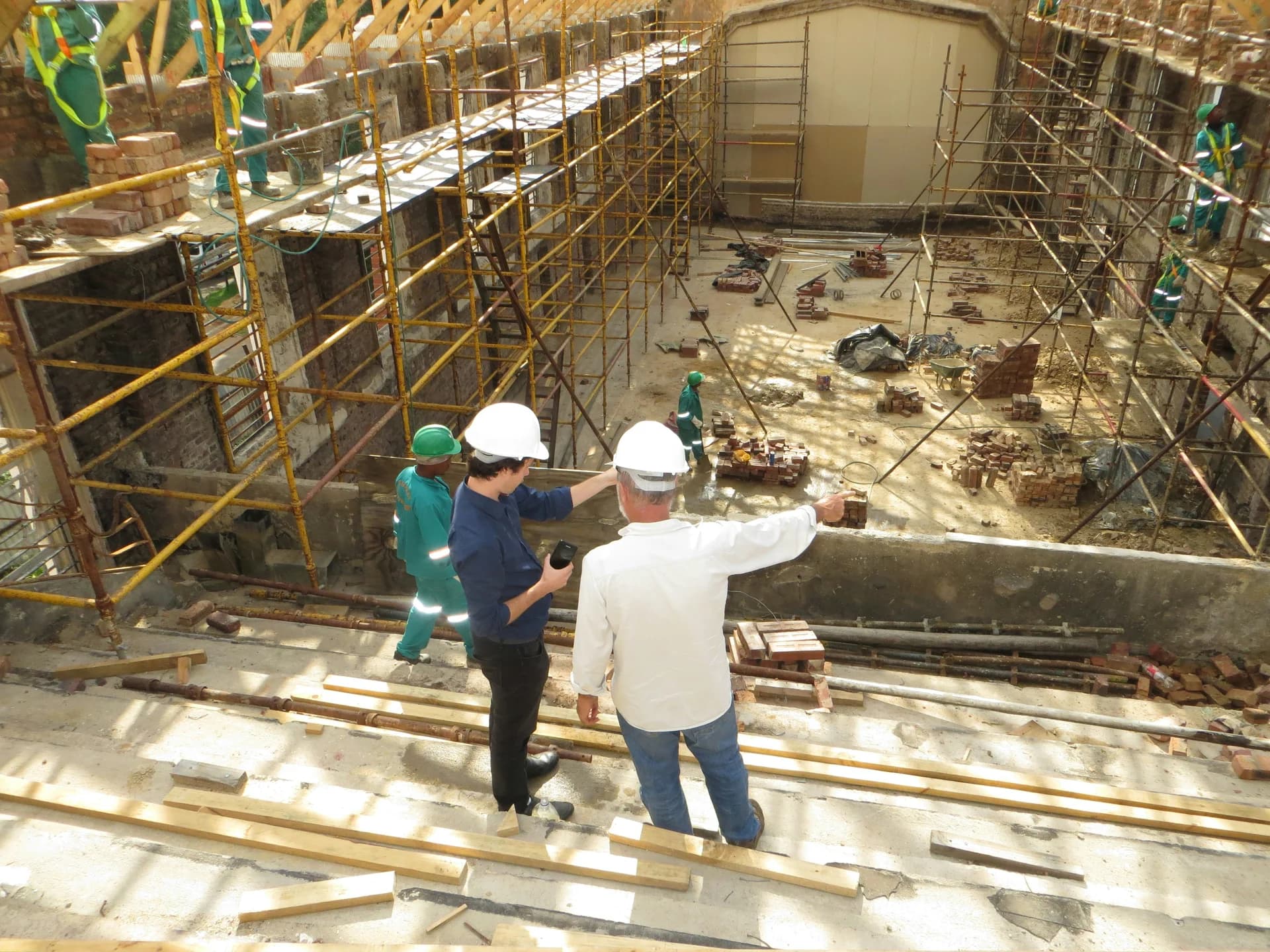
ASTM E1527-21 (Section 9.4) specifies the items the Environmental Professional must observe, note the presence or absence of, and document during the site visit. The following are the core required observation categories. The EP must also observe adjoining properties where accessible.
Underground storage tanks are one of the most common sources of RECs on commercial properties.
Any tank storing hazardous substances or petroleum products above grade.
55-gallon drums and intermediate bulk containers storing chemicals or waste.
Any stored chemical, solvent, fuel, or industrial material beyond standard retail quantities.
Older transformers may contain PCB-containing dielectric fluid; the EPA banned PCB manufacture in 1979 under TSCA.
Discoloration, iridescence on pavement, or unusual soil color indicating chemical release.
Dying or discolored vegetation in patterns that may suggest chemical or fuel contamination of soil.
Evidence of past disposal of construction debris, industrial waste, or municipal solid waste on site.
Used historically for waste storage or settling; common at industrial and agricultural sites.
May indicate past chemical use in buildings; interior floor drains can connect to subsurface releases.
Any well type — active, abandoned, or capped — on the property.
On-site sewage systems can be impacted by hazardous substance use if connected to industrial processes.
Any chemical, petroleum, or unusual odor observed during the inspection.
Chemical staining on interior building surfaces, particularly in areas of historical industrial use.
Uneven terrain can indicate buried waste or prior excavation and fill with contaminated material.
Ponds, streams, wetlands — evaluated as potential receptors or migration pathways.
Condition of storm drains and potential for contamination pathways to surface water.
Identification of current and historical uses of neighboring properties that could be sources of RECs.
The EP also documents the general condition of structures on the property, materials handling areas, loading docks, and any evidence of past industrial operations not apparent from historical records. Where access to adjoining properties is not available, the EP must attempt to observe conditions from the site boundary or from public vantage points and document any access limitations.
6. Interviews
ASTM E1527-21 (Section 10) requires the EP to conduct interviews with individuals who have knowledge of current or past site conditions. The standard identifies the following required and recommended interview subjects:
The current property owner and any current occupants or operators of the property must be interviewed or must decline to participate (with the declination documented).
Anyone who has managed the property and has knowledge of its use history and any known contamination events.
The person most knowledgeable about current site operations, particularly regarding hazardous materials use and storage.
Prior owners or occupants who may have relevant knowledge of historical land use, especially for properties with industrial or commercial history.
Officials from fire departments, public health agencies, or local environmental regulators if the EP has reason to believe they may have relevant information about the property.
When an interviewee declines to participate or is not accessible, the EP must document the attempt and the reason for non-response. Failure to complete required interviews is a data gap that must be disclosed in the report.
7. What the Phase 1 ESA report must contain
ASTM E1527-21 (Section 12) specifies minimum content requirements for the written report. Every compliant Phase 1 ESA report must include:
Summary of findings
A description of all information sources reviewed, all items observed during site reconnaissance, and the results of government database searches.
Opinions on RECs, HRECs, CRECs, and de minimis conditions
The EP's professional judgment on whether each identified condition constitutes a REC, HREC, CREC, or de minimis condition — with the reasoning explained. A CREC requires documentation of the applicable institutional or engineering controls still in effect.
Data gaps and significant data gaps
All cases where required information was unavailable, and whether each gap is significant (could affect the ability to identify RECs).
Standard conclusion statement
The EP must state whether RECs were identified and whether significant data gaps exist. A report may simultaneously identify RECs and note significant data gaps — these are not mutually exclusive. The conclusion must be based solely on the assessment conducted under E1527-21 (Section 12).
EP signature, qualifications, and date
The report must be signed and dated by the Environmental Professional. Their qualifications statement must be included, demonstrating that they meet the EP definition under 40 CFR § 312.10(b).
Reliance limitations
The report must state the party for whom it was prepared and under what conditions it may be relied upon by others (such as a lender). Third-party reliance is limited unless the firm issues a reliance letter.
What is not required under the standard
A Phase 1 ESA conducted under ASTM E1527-21 does not include — and the standard explicitly excludes — the following:
Many firms offer these as add-on services, conducted as separate engagements outside the Phase 1 ESA scope. Properties with pre-1980 construction materials are commonly evaluated for asbestos or lead-based paint through such separate assessments.
This checklist is based on ASTM E1527-21 (Standard Practice for Environmental Site Assessments: Phase I Environmental Site Assessment Process, approved November 1, 2021). Specific requirements may vary by state, lender, or transaction type. This page is provided for informational purposes only. Consult a licensed Environmental Professional for guidance specific to your property.
Get a compliant Phase 1 ESA for your property
Connect with licensed Environmental Professionals who conduct ASTM E1527-21 compliant assessments. Tell us about your property and we'll match you with qualified firms in your area.
Request free quotes