Explainer
What Is a Phase 1 Environmental Site Assessment?
A Phase 1 ESA is a non-invasive investigation of a commercial property's environmental history. Lenders require one before approving most commercial mortgages, and completing one properly is what qualifies a buyer for federal Superfund liability protections under CERCLA.
Updated March 2026 · 7 min read
Why a Phase 1 ESA is required
Under the federal Comprehensive Environmental Response, Compensation, and Liability Act (CERCLA — commonly known as Superfund), a property owner can be held liable for cleaning up contamination even if they didn't cause it. CERCLA provides liability defenses — but only if the buyer conducted what the EPA calls All Appropriate Inquiries (AAI) before the purchase. The relevant defenses include innocent landowner, bona fide prospective purchaser, and contiguous property owner status.
Per the EPA's AAI rule, a Phase 1 ESA conducted in compliance with ASTM E1527-21 satisfies the AAI requirement. A Phase 1 that does not comply with this standard does not satisfy AAI and does not provide the federal liability protections.
On top of the CERCLA requirement, most commercial lenders require a Phase 1 before approving a mortgage. The lender wants to know they're not financing a site with unknown cleanup liability as collateral.
What a Phase 1 ESA involves
ASTM E1527-21 requires four components, each completed by or under a qualified Environmental Professional (EP):
Records review
The EP pulls historical records to build a picture of what the property was used for going back as far as records exist: aerial photographs, Sanborn fire insurance maps, topographic maps, city directories, and state and federal regulatory databases. Anything that could have left contamination behind — fuel storage, manufacturing, dry cleaning, agricultural chemical use — needs to show up here.
Site reconnaissance
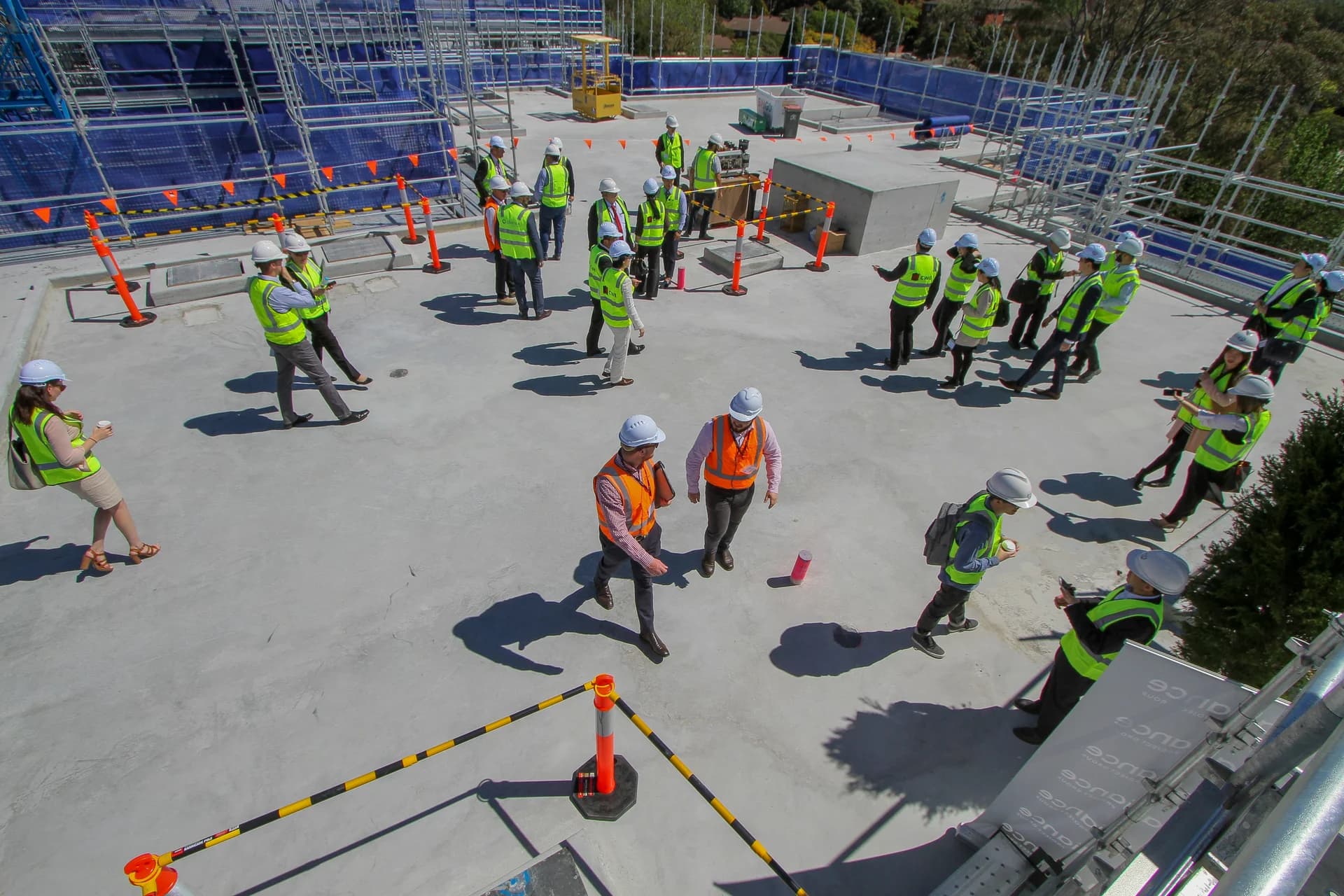
The EP physically visits and walks the property to look for visual evidence of contamination or environmental concern. This includes staining on soil or pavement, fill material of unknown origin, underground storage tank fill ports, abandoned drums or containers, stressed vegetation, and signs of chemical use. The EP also observes immediately adjoining properties for similar indicators.
Interviews
The EP interviews current and past owners, operators, and occupants, as well as local government officials. The point is to surface anything that wouldn't appear in the records — an owner who knows a former tenant stored chemicals on-site, or a neighbor who remembers a spill.
Written EP report
The EP produces a written report documenting all findings and drawing conclusions about the likelihood of contamination. The report identifies any Recognized Environmental Conditions (RECs), Historical RECs (HRECs), or Controlled RECs (CRECs). It must be signed by the EP, who takes professional responsibility for the conclusions. No soil or groundwater samples are collected during a Phase 1 — it is entirely non-invasive.
What is a Recognized Environmental Condition (REC)?
The most important phrase in any Phase 1 report is Recognized Environmental Condition — REC for short. Per ASTM E1527-21, a REC covers three scenarios:
(1) The confirmed presence of hazardous substances or petroleum products in, on, or at the property due to a release to the environment;
(2) The likely presence of such substances due to a release or likely release; or
(3) The presence of such substances under conditions that pose a material threat of a future release.
Per ASTM E1527-21, Section 3 (Definitions). Paraphrased from the standard's published summary on store.astm.org.
ASTM E1527-21 also distinguishes between three REC categories:
An active concern — contamination is present, likely, or poses a material threat of future release.
A past release that has been addressed to regulatory satisfaction, with no further action required. Treated as resolved.
Contamination that has been addressed but is subject to ongoing regulatory controls or land use restrictions (e.g., cannot build residential on the site).
A condition that is explicitly excluded from REC classification — a minor, isolated release with no significant risk of impact to the property or health.
What is ASTM E1527-21 and why does it matter?
ASTM E1527-21 is the current standard for Phase 1 ESAs, published by ASTM International and effective November 2021. It replaced the prior version, ASTM E1527-13.
The EPA recognizes ASTM E1527-21 as satisfying the AAI requirements under 40 CFR Part 312. A companion standard, ASTM E2247-23, covers forestland and rural property assessments.
A Phase 1 that doesn't comply with E1527-21 fails on all three counts:
- ✕The buyer does not qualify for federal CERCLA liability protections.
- ✕Most commercial lenders will not accept the report.
- ✕The assessment does not constitute adequate environmental due diligence.
Who can conduct a Phase 1 ESA?
Under the EPA's AAI rule (40 CFR Part 312), every Phase 1 must be conducted by or directly supervised by a qualified Environmental Professional (EP). There are three ways to qualify:
A current state or tribal license, certification, or registration as a professional engineer (PE), professional geologist (PG), or equivalent, plus 3 years of relevant full-time experience.
A bachelor's degree (or higher) in engineering, geology, earth science, environmental science, or related field, plus 5 years of relevant full-time experience.
10 years of relevant full-time experience — no degree or license required.
A consultant without a PE or PG license can be a fully qualified EP under pathway 2 or 3. Ask any prospective firm which EP pathway their lead consultant satisfies, and request proof of professional liability (E&O) insurance.
Report freshness and timing requirements
The timing rules for a Phase 1 are component-specific, not a single blanket expiration date — which is what trips most people up:
| Component | Must be completed within |
|---|---|
| Interviews, site inspection, database searches | 180 days before acquisition |
| Government and historical records review | 1 year before acquisition |
| Full assessment (if not updated) | 1 year before acquisition |
Per ASTM E1527-21, assessments are treated as point-in-time evaluations presumed viable for 180 days before acquisition for the time-sensitive components. A report that is 7 months old can still be non-compliant if its database searches have expired — 7 months exceeds the 180-day window even though it falls within the 1-year window. Parties relying on an existing report should verify compliance with their lender and attorney.
What happens after the Phase 1 report?
Three things can happen after a Phase 1 comes back:
The report is clean. The buyer satisfies AAI, qualifies for CERCLA liability protections, and the lender can proceed. This is the most common outcome for standard commercial properties with straightforward histories.
The lender or buyer orders a Phase 2 ESA to collect soil and groundwater samples and confirm whether contamination exists. Many deals proceed through this step, often with price adjustments or remediation escrow built into the contract.
The parties negotiate. The seller may agree to remediate before closing, the price may be reduced to account for remediation costs, or — in severe cases — the buyer walks away. A Phase 1 alone never confirms contamination; that requires a Phase 2.
This article is for general reference only. ASTM E1527-21 and the EPA's All Appropriate Inquiries rule are the authoritative sources for Phase 1 ESA requirements. Consult a licensed environmental professional for advice specific to your property and transaction.
Need a Phase 1 ESA for your property?
Get quotes from licensed Phase 1 ESA firms in your area. Free to use, no obligation to hire.
Request free quotes